
What you've got up there
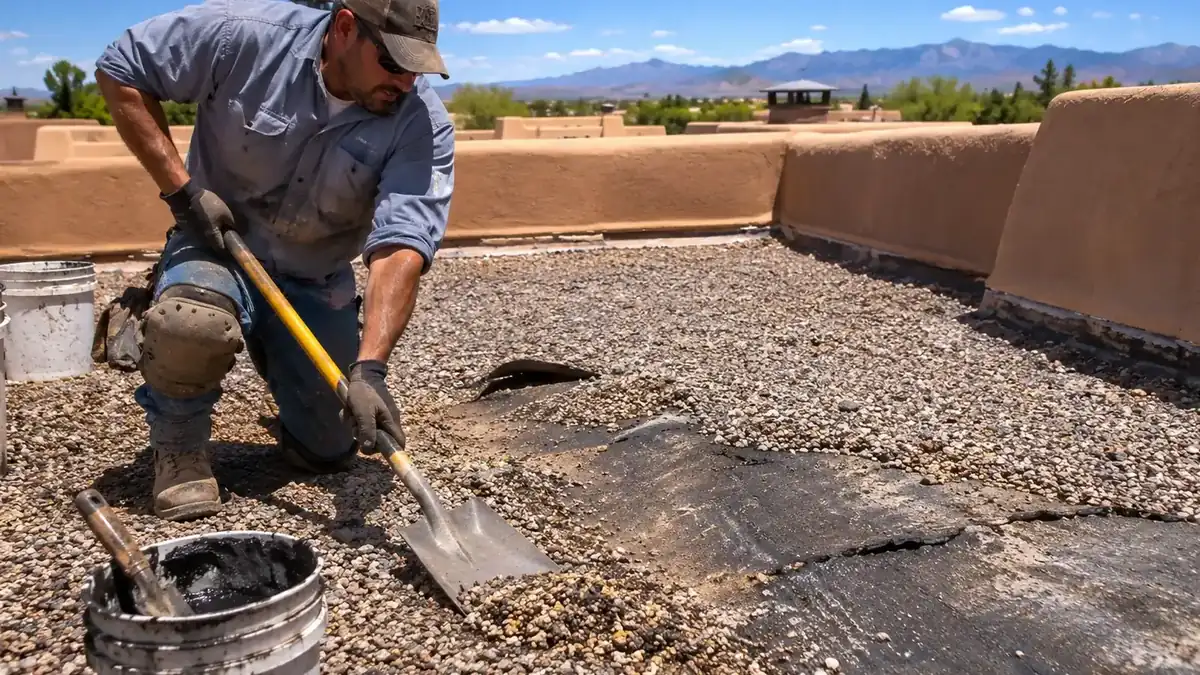
A tar and gravel roof is layers of felt mopped together with hot asphalt, finished with a flood coat and gravel. The asphalt keeps water out; the gravel keeps the sun off the asphalt. On older Corrales homes it's often the original roof, sometimes with later patches of roll roofing or foam on top.
Signs it's failing
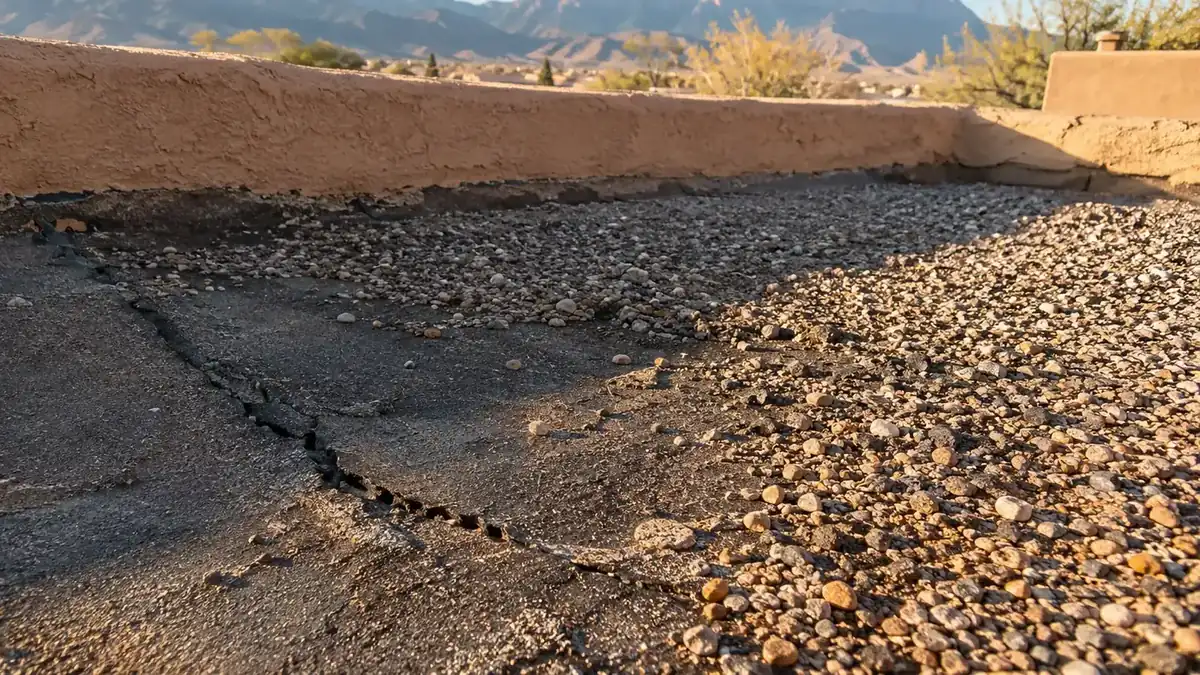
- Bare patches where wind and water moved the gravel
- Cracks and splits running along the felts
- Soft blisters underfoot
- Gravel and leaves piled in low spots and at canales
- Edges pulling away where the roof turns up the parapet
Repairs
For limited problems we scrape back the gravel, cut out blisters and splits, patch with compatible asphalt materials, re-flash edges and canales, and re-embed gravel over the repair. The wrong patch material on asphalt shrinks and cracks in the summer heat, so material matters.
When to replace
If the felts are wet across large areas, leaks keep moving around, or the roof is soft underfoot, repairs just buy time. Replacement usually means removing the gravel, checking moisture, then either spraying foam over a dry, prepared surface or tearing off and installing TPO or modified bitumen. See flat roof replacement and foam roofing.
Casitas and barns
Built-up roofs on casitas, studios and barns get the same choices, often with simpler details. See outbuilding roofs.
Call (505) 448-8495 for a free look at your tar and gravel roof.
Roofing questions
How long do tar and gravel roofs last?
Often 15 to 30 years depending on construction and drainage. Many in Corrales are older and living on repairs.
Can you foam over tar and gravel?
Often, if the old roof is dry and properly prepared. Wet areas have to be removed first.
Can it just be coated?
Not over loose gravel. The surface has to be prepared, and usually foam or a new membrane is the better choice.