
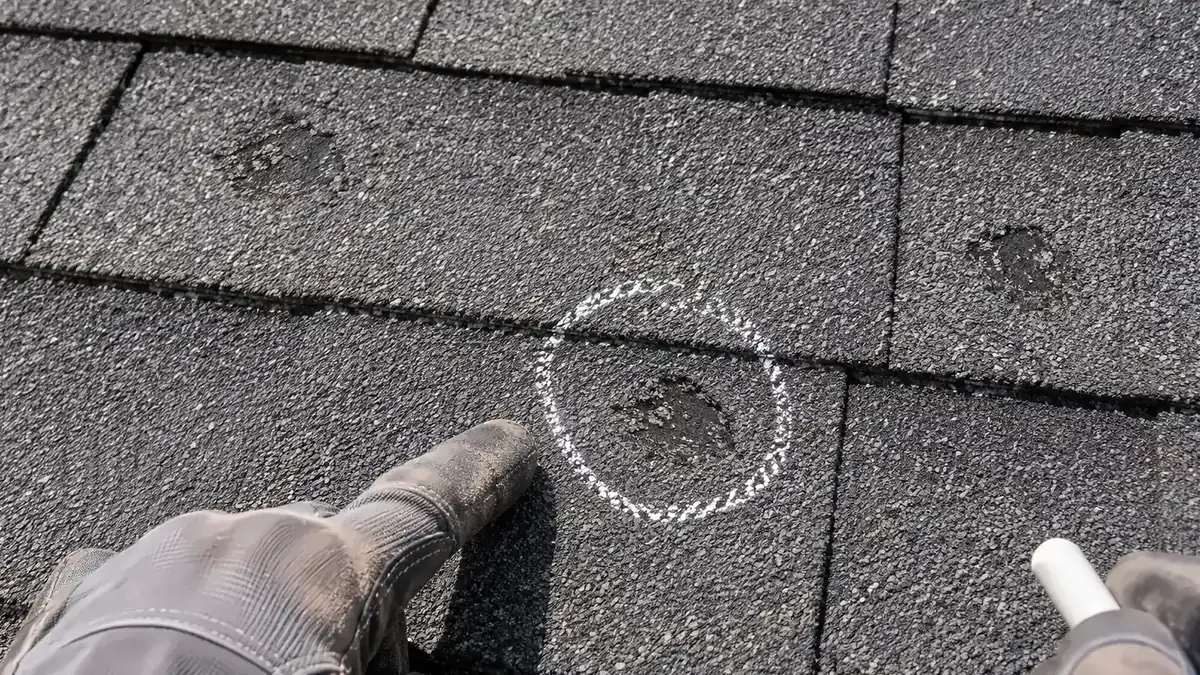
Hail and wind are the two big reasons Corrales and Rio Rancho homeowners end up filing a roof claim. The process isn't complicated, but a few details decide whether it goes smoothly. This guide covers the usual order of events. Your own policy and your insurance company have the final word on what's covered.
1. Right after the storm
- Stay off the roof. Look from the ground: dented gutters, downspouts, cooler housings and vents are good clues. See signs of hail damage.
- Take dated photos of anything damaged — siding, screens, patio covers, cars, ceiling stains.
- Write down the storm date. Policies usually ask you to report damage promptly, and some set a hard deadline.
- Stop active leaks if you can do it safely (a bucket, a tarp from a roofer). Most policies expect you to prevent further damage.
2. Get a roof inspection before you call it in
A roofer can tell you whether there's real storm damage or just normal wear. That matters: a claim for wear and tear usually gets denied, and some people would rather not have a denied claim on file. A good inspection includes close-up photos of impacts, the roof's age and type, and an honest opinion on whether a claim makes sense.
3. File the claim
Call your insurer or use their app. Give the date of the storm, what you've seen and your photos. You'll get a claim number and an adjuster will be assigned.
4. The adjuster visit
The adjuster inspects the roof and writes up what the policy will pay for. It helps to have your roofer there to point out damage the adjuster might miss — soft hits on shingles, cracked coating on a flat roof, dented flashing. Your roofer documents and explains; the negotiation of your claim is between you and your insurer.
5. Read the estimate (the "scope")
| Term | What it means |
|---|---|
| Deductible | The part you pay. Some policies use a flat amount; others use a percentage of your home's insured value for wind and hail. |
| RCV (replacement cost value) | What it costs to replace the roof today. |
| Depreciation | An amount held back for the roof's age. |
| ACV (actual cash value) | RCV minus depreciation — often the first check. |
| Recoverable depreciation | On many replacement-cost policies, paid after the work is finished and invoiced. |
| Supplement | A request to add items the first estimate missed, like code-required parts found during tear-off. |
More on this in does insurance cover roof replacement.
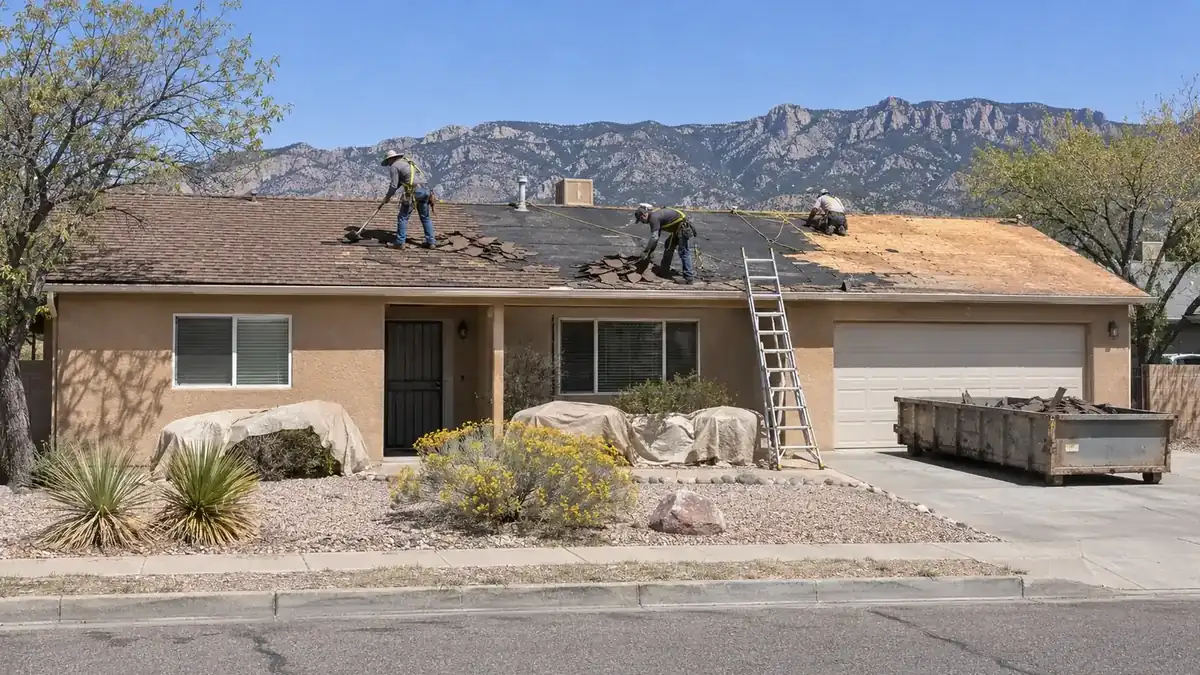
6. Do the work and close it out
Once the scope is approved, the roof gets replaced or repaired. Afterward the roofer sends a final invoice and photos, and on a replacement-cost policy that's usually what releases the held-back depreciation.
Red flags to avoid
- Anyone offering to "cover" or "waive" your deductible — that's a misrepresentation to your insurer and can put your claim at risk.
- Door-knockers who show up right after a storm and want a signature on the spot.
- Contracts that sign over your insurance check before you know the price.
- No New Mexico contractor's license number on the paperwork.
Think you have storm damage? Call (505) 448-8495 for a free inspection and honest advice on whether a claim makes sense.
Roofing questions
Will filing a claim raise my rates?
It can, depending on your insurer and claim history. That's one reason to get an inspection first.
How long do I have to file?
It depends on your policy. Many require prompt notice, and some set a firm deadline after the storm date. Check your policy or ask your agent.
Can you talk to my insurance company for me?
We can meet the adjuster, show the damage and provide photos and measurements. Your claim itself is between you and your insurer.
Do I have to use the roofer my insurer recommends?
Usually not. You can generally choose your own licensed roofer — confirm with your insurer.